
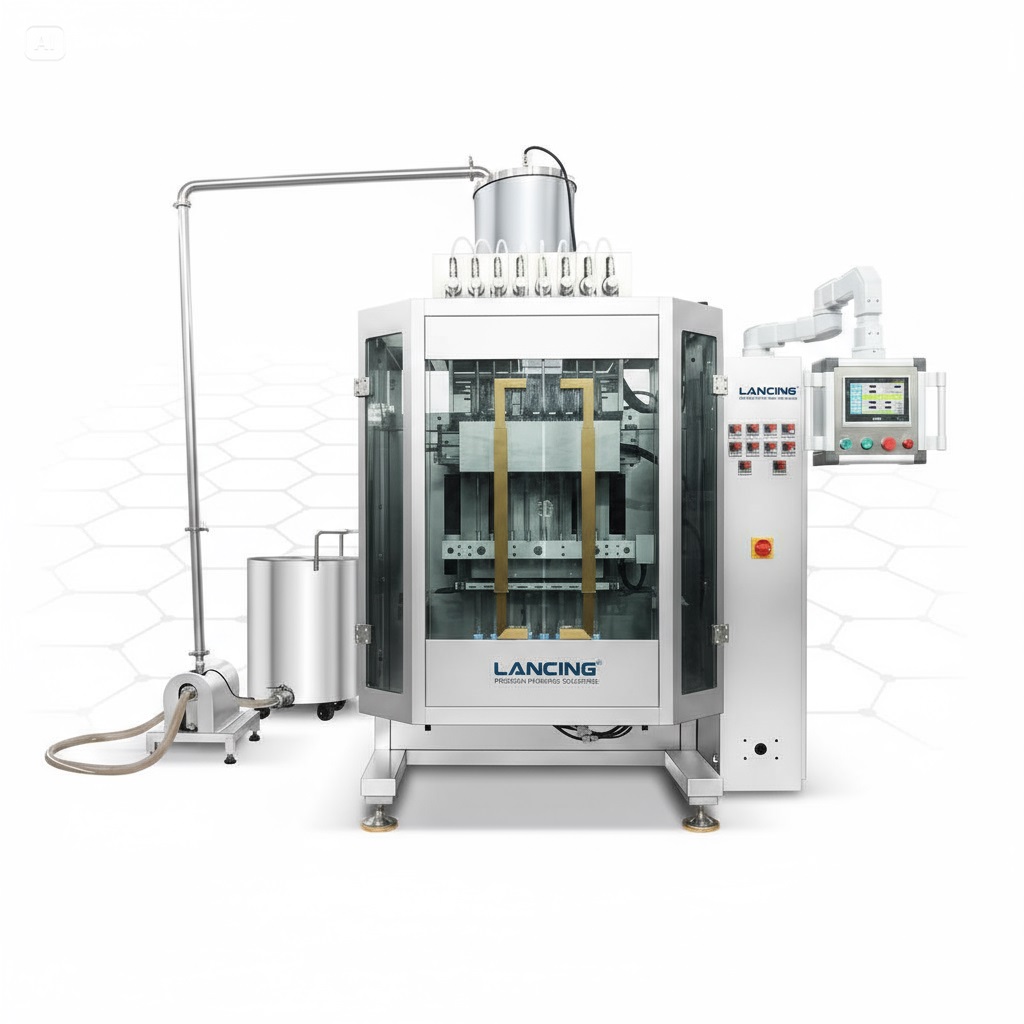
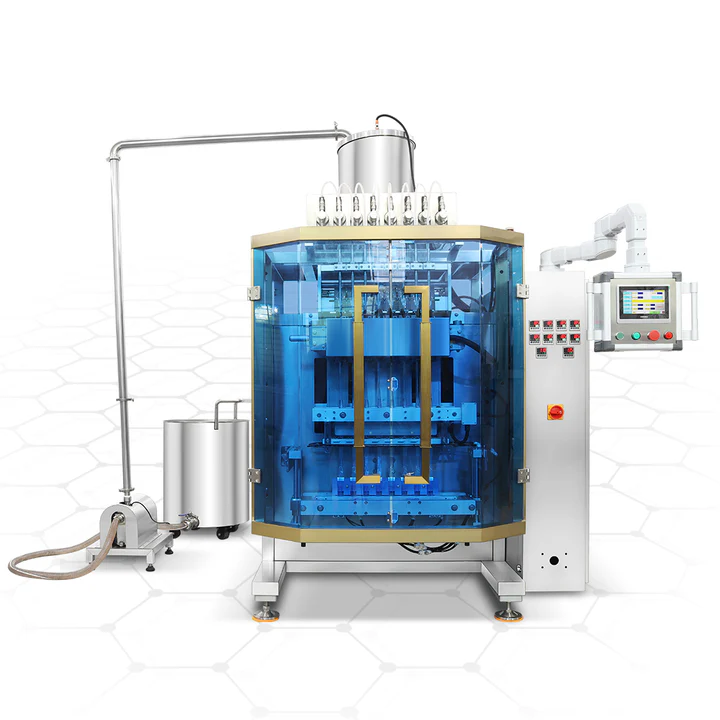

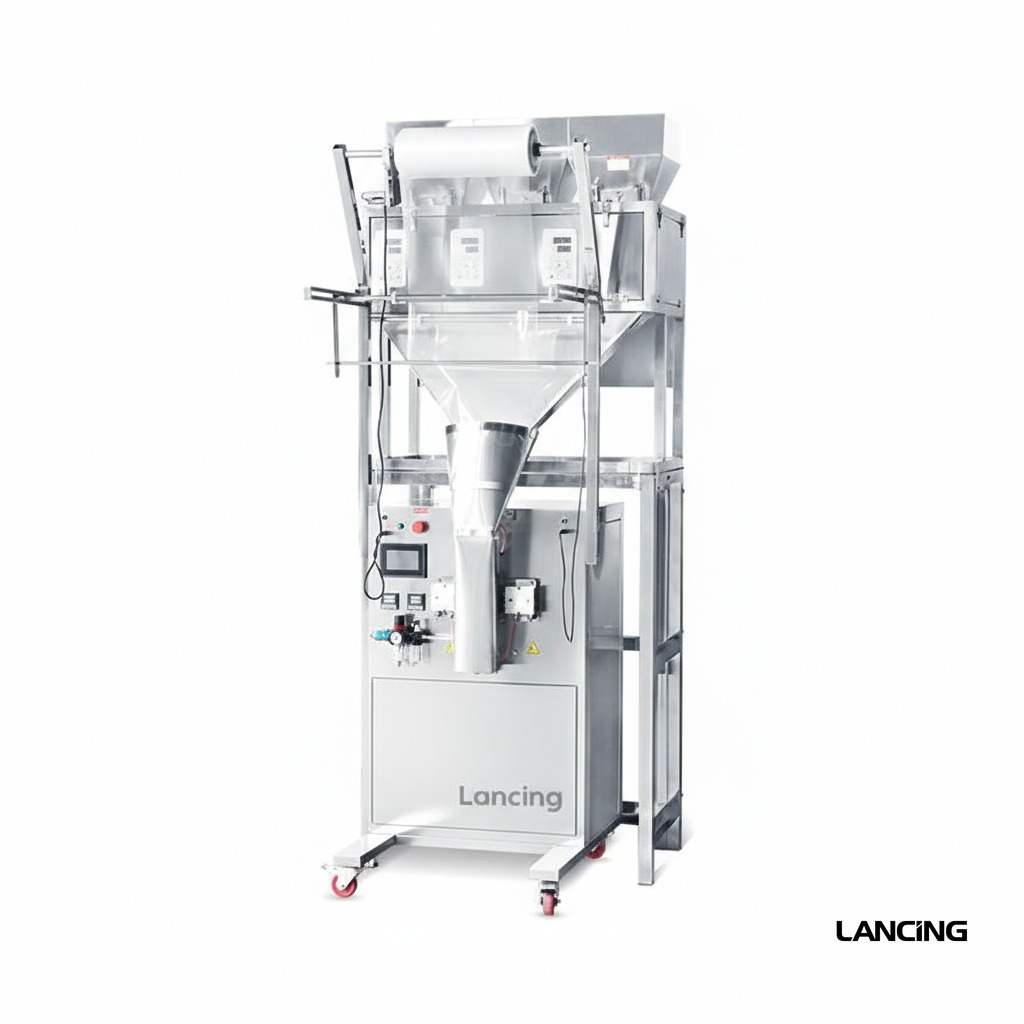
Back Seal Granule Pouch Filling & Sealing Machine
Back-seal granule pouch filling and sealing system for higher bagging speeds with adjustable product and film formats.

Vertical form fill seal systems form the bag from roll film, dose product and seal the finished pack in a connected process.
These details decide whether the selected pouch filling route will be reliable in production.


Example machinery routes using Lancing UK source media and published machine information.
Back-seal granule pouch filling and sealing system for higher bagging speeds with adjustable product and film formats.
Better information normally gives a faster and more accurate machinery shortlist.
| Requirement | Why it matters | Example detail |
|---|---|---|
| Product behaviour | Controls the dosing method and clean cut-off route. | Powder, granule, thin liquid, viscous paste, particulates. |
| Pouch or film | Changes opening, sealing, registration and bag-forming requirements. | Dimensions, material, gusset, zipper, spout, seal width. |
| Output target | Determines automation level and line layout. | Bags per minute, shifts per day, manual steps to replace. |
| Line integration | Prevents bottlenecks after filling and sealing. | Coder, checkweigher, outfeed conveyor, secondary packaging. |
VFFS is used where roll film is formed into bags or pouches and filled automatically as part of one machine process.
It can be, but the pump, cut-off, seal control and bag style must be matched to the liquid or paste.
Product flow, film registration, heat sealing, pack length and downstream handling can all limit practical speed.
We’ll help shortlist whether a premade pouch machine, VFFS bagger, auger, multihead weigher, piston pump or multi-channel liquid system is the practical route.
A VFFS machine converts a moving web of film into a filled, sealed pack. Stable output depends on matching the film, former, dosing time and seal cycle rather than selecting a machine by bag width alone.
Provide laminate construction, sealant layer, thickness, reel width, repeat length, core, maximum reel diameter, registration mark and artwork direction. Printed film should be trialled because stretch, slip and sensor contrast affect cut position.
The former must create the intended bag without creasing the web or restricting product flow. Product drop height, bounce, dust, settling and the time needed to clear the cross-seal area can determine the practical cycle.
Back, lap or fin seals and the top/bottom cross seals need compatible jaw faces, temperature, pressure, dwell and cooling. Product in the seal, film tracking errors or trapped air can create rejects even when the machine is cycling correctly.
Send confirmed production information, not only a target bag size.
| Area | Required information | What the trial should prove |
|---|---|---|
| Film web | Structure, thickness, sealant, width, repeat, marks, core and reel diameter. | Tracking, registration, forming and repeatable seals without damaging print. |
| Bag format | Width, length, gusset, seal style, tear features and desired headspace. | Correct dimensions, square cuts and acceptable presentation. |
| Dosing | Product sample, dose range, tolerance, density or viscosity and particles. | Stable feed, controlled cut-off and no product in the sealing window. |
| Coding | Code method, content, print zone and required verification. | Legible, correctly positioned code after forming and sealing. |
| Inspection | Fill checks, metal detection or checkweighing where required, seal test and rejects. | Defined non-conforming packs are detected and handled as specified. |
| Changeover | Product, film and bag-size schedule plus cleaning requirements. | Parts, recipes, settings and first-off checks are practical and documented. |
This page covers pouch and bag production as part of the pouch filling decision. For deeper reel-fed forming, sealing, film tracking and VFFS engineering guidance, use Form Fill & Seal. For narrow sachets and multi-lane equipment, use Sachet Filling Machines.
For a pouch project, Lancing still needs the same core evidence: actual product, production-equivalent film, target dose, permitted tolerance, saleable output, code position, utilities, cleaning method and the downstream line scope.
All values remain subject to product, film, sealing and line trials.
Provide the complete laminate, sealant layer, thickness, web width, print repeat, registration mark, core, reel diameter and artwork direction. A production-equivalent reel is needed for a meaningful forming and sealing trial.
The product has to be measured and clear the sealing zone before the cross jaws close. Dust, bounce, long strings, slow pump cut-off, settling and large pieces can extend the cycle or contaminate the seal.
Different widths commonly require a matching forming set and setup changes. The available range, film width, jaw width, product tube and downstream handling should be checked for every proposed format.
Run the intended film for long enough to observe registration, edge position, seal alignment and cut location. Record adjustments and reject conditions rather than assessing only a few hand-picked bags.
The method depends on the product, laminate and seal design. Agree a documented procedure such as a defined squeeze, peel, burst, vacuum or immersion test where appropriate, together with sampling frequency and acceptance limits.
Lancing can compare the dosing method, forming set, seal arrangement, coding and inspection scope using production-equivalent materials.
A VFFS trial should leave behind enough information for the same film and bag format to be set again after a reel change, planned stop or product change. The record links the approved film, forming parts, seal setup, coder and first-off checks to one controlled format.
| Setup point | Record for the approved format | What the approval demonstrates |
|---|---|---|
| Film identity | Supplier, construction, sealant layer, thickness, web width, repeat, artwork direction, core and reel details. | The trial material is traceable and equivalent film can be identified for production. |
| Unwind and web path | Unwind direction, edge reference, tension or brake setup, rollers and any web guide position. | The web tracks without persistent edge movement, creasing or damage to the print surface. |
| Registration | Sensor position, mark contrast, print repeat, cut offset and expected response to a missing or unreadable mark. | Artwork, cut and seal positions remain aligned through a representative run. |
| Former and product tube | Former identity, tube or chute, film threading path, bag width and product-clearance checks. | The bag forms cleanly and the product clears the cross-seal window. |
| Longitudinal seal | Lap, fin or back-seal arrangement, alignment and approved appearance. | The continuous seal is positioned and formed consistently on the intended laminate. |
| Cross seal and cut | Jaw setup, bag length, cut position, tear feature, cooling or support and accepted seal-test method. | The top and bottom seals, cut and finished dimensions match the approved pouch. |
| Coding and inspection | Code content, print zone, orientation, verification and any reject response. | The code remains readable and correctly placed after forming, filling and sealing. |
Include a controlled stop and restart in the trial so the team can review film position, partially formed bags, product clearance and the first acceptable pouch after recovery. Where reel changes are part of normal production, document the threading or splice method and the checks required before measured output resumes.
Record rejects created during setup and recovery rather than excluding them from the evidence. This separates maximum cycle capability from sustained saleable output.
This page covers VFFS as a pouch filling route. Detailed forming-set, reel handling and film-seal engineering belongs with Lancing Form Fill & Seal. For a pouch project, use the pouch sealing guide to define finished-pack checks and the trial guide to agree measured evidence.
VFFS performance is not defined by the former alone. Reel condition, web tension, registration, forming geometry, longitudinal seal, product drop timing, cross-seal conditions and cooling all contribute to the finished bag.
Record the laminate, sealant layer, thickness, web width, core, maximum reel diameter, print repeat, registration mark and unwind direction. Telescoped, damaged or loosely wound reels can create tracking changes even when the machine settings are unchanged.
The former must create the intended overlap, fin or lap seal without excessive drag or creasing. Product release needs to be timed so powder, granules, liquid strings or splashes do not enter the cross-seal zone.
Longitudinal and cross seals may need different process conditions. Jaw faces, pressure distribution, dwell, film movement, product contamination and cooling should be reviewed together, followed by a defined integrity check on the finished bag.
Use the film and laminate guide to prepare reel data, the dosing guide to control product release and the seal-integrity guide to define acceptance.
Vertical form fill seal performance depends on the complete film path, not only the nominal laminate and finished bag dimensions.
Reel condition controls how consistently the web unwinds and tracks. Telescoping, damaged edges, variable winding tension, a loose core, poor splice construction or storage distortion can move the web relative to the former, registration sensor and sealing jaws.
Record reel identity and condition during trials so a web-handling problem is not mistaken for a dosing or sealing fault.
Re-establish web tracking, print registration, bag length, longitudinal seal position and cross-seal alignment before counting good packs. The first pouches after the change should be identified and checked separately because tension and registration may still be stabilising.
Include the change in the output and acceptance test if reel changes are part of normal production.
Registration drift can arise from web slip, changing tension, sensor contrast, print-repeat variation, edge tracking or acceleration during stop and restart. The investigation should compare the physical mark, sensor response and web position rather than changing bag length repeatedly without evidence.
Retain samples showing the drift and the corresponding settings so the cause can be separated from print variation.
A seal can form under heat and pressure yet distort, peel or move before it has developed enough strength for cutting and discharge. Cooling time, jaw release, product weight and downstream handling therefore influence the finished seam even when the hot-jaw settings appear stable.
Evaluate the pouch after normal discharge and handling, not only while it is still supported in the machine.
Send the application details, representative samples and required acceptance checks so Lancing can review the suitable pouch filling route.
A VFFS changeover links the film reel, unwind, tracking, registration, former, bag length, dosing sequence and seal-jaw process. The first-off approval should therefore confirm the complete material path rather than only the finished dimensions.
Record supplier reference, laminate, width, repeat, unwind direction, core, registration mark and splice condition. Confirm the reel is loaded in the intended orientation and the web follows the approved path.
Identify the former and change parts, web centring, tension and registration settings. Run enough material to expose drift, curl, print variation or a tracking correction that affects the longitudinal seal.
Confirm timing between product fall and jaw closure, finished length, cut position, seal alignment, cooling and the product-free seal band. Approve the code and any downstream inspection recipe at the same time.
Document the sequence in the changeover validation guide, then use the FAT and SAT guide to retain the approved setup evidence.
The check quantity should be defined by the risk and the time needed to expose registration, tracking, dosing and seal variation. One acceptable pouch is not enough evidence of a stable setup. Record a sequence that includes normal running and, where relevant, a stop and restart.
Only when the controlled specification and change assessment show that the differences cannot affect forming, tracking, sealing or the finished pack. Supplier, laminate, thickness, slip, coating, print repeat or sealant changes may require partial or full revalidation.
A larger or differently behaving dose can change product fall, settlement, headspace and the risk of product reaching the cross-seal. The bag length, dosing point and settling time should be checked together using the actual product.
Check registration, bag length, dose, seal alignment, product-free seal area, code and the handling of any pouch formed during the interrupted cycle. The control sequence should prevent an uncertain pouch from being released as good product.