
Start-up and priming
Define how the doser reaches a stable condition, how initial product is handled and which checks release the first pouch. Liquids may contain trapped air; powders may settle or compact after transport.
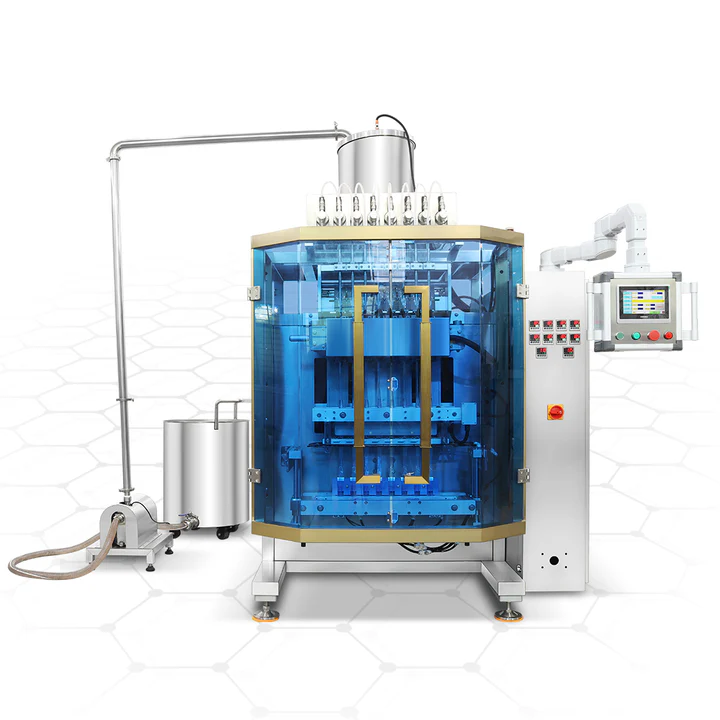
Select the dosing route from real product behaviour and the complete production cycle, not from the ingredient name alone.
The pouch machine presents a pack and creates a seal; the dosing system must deliver the intended amount cleanly inside that pack. Selection therefore connects product behaviour, dose range, feed method, product-contact design, cut-off, cleaning and the available opening or forming tube.
| Product behaviour | Routes to evaluate | Evidence required | Main trial risks |
|---|---|---|---|
| Free-flowing granules | Linear or multihead weighing; volumetric cup where the product and tolerance permit. | Bulk density range, piece size, fragility, target dose and acceptable giveaway. | Bounce, breakage, segregation, product trapped in seal and feed starvation. |
| Fine or cohesive powder | Auger dosing with product-specific feed and hopper arrangement. | Flowability, aeration/compaction, dust, hygroscopic behaviour, dose range and sample. | Bridging, density change, dust, tailing and seal contamination. |
| Thin liquid | Pump route selected for compatibility, flow and control. | Viscosity/temperature range, foam, conductivity where relevant, dose and cleaning method. | Drip, splash, air, foam, head-pressure change and wet seal area. |
| Viscous liquid or paste | Piston or positive-displacement pump route where appropriate. | Viscosity at fill temperature, particles/fibres, stringing, pressure and cleaning. | Cut-off, nozzle loading, product damage, air pockets and slow recovery after pause. |
| Mixed solids and liquid | Specialist trial; potentially separate controlled streams or a filler designed for the mixture. | Largest particle, concentration, settling rate, shear sensitivity and target distribution. | Segregation, valve blockage, particle damage and inconsistent component ratio. |
Dosing performance can change as hopper level, tank head, product temperature or aeration changes. The trial should include the states operators will experience rather than a short uninterrupted run at one ideal condition.
Define how the doser reaches a stable condition, how initial product is handled and which checks release the first pouch. Liquids may contain trapped air; powders may settle or compact after transport.
Observe product top-up, hopper/tank level control and the effect of the feeder. Record surges, density changes, foam, segregation, dust or temporary dose movement.
Include a realistic stop. Check product settling, cooling, drip, crusting, compaction or bridge formation and define how affected in-process pouches are cleared or rejected.
The filler outlet must pass through the usable pouch opening or forming tube with enough clearance for the product. The release height and timing should control splash, bounce, dust and product strings so the seal band remains clean.
For premade pouches, confirm opening and gripping with the pouch handling guide. For finished-pack acceptance, use the seal-integrity guide. If the result changes during production, structure the evidence with the troubleshooting guide.
A dosing result is meaningful only when the product, dose, feed condition, sample size, measurement equipment and calculation are stated. The complete line should also record rejected packs and product loss rather than presenting only selected accepted samples.
| Result | Condition to state | Why it matters |
|---|---|---|
| Individual dose checks | Product, dose, time/stage and calibrated measurement method. | Shows spread and identifies changes during refill or restart. |
| Average and variation | Number of pouches and treatment of rejects or adjustments. | Makes comparisons repeatable and prevents selective reporting. |
| Saleable output | Codes, seals, checks, rejects, replenishment and stops included. | Separates usable production from empty-cycle speed. |
| Product loss | Dust, drips, purge, rejects and clean-down residue. | Reveals process cost and contamination/cleaning risk. |
These product families normally require different dosing principles. Some machine platforms can accept alternative modules, but each product, dose, feed and cleaning condition must be reviewed and trialled.
No. Products with the same name can differ in density, particle distribution, moisture, flow and fragility. Representative samples and the required dose/tolerance are more useful.
The feeder can aerate, compact, segregate or surge the product and can change tank or hopper level. Those effects may alter dose, dust, foam or cycle recovery.
Record particle size and concentration, settling, product temperature, valve/nozzle clearance, dose distribution and any damage. The result must show both total dose and component consistency where that matters.
A trial is especially important when flow, viscosity, particles, foam, dust, compatibility, seal contamination or the required tolerance cannot be confirmed from existing verified evidence.
Lancing can use the product evidence, pouch opening and acceptance requirements to shortlist the dosing and machine route for trial.