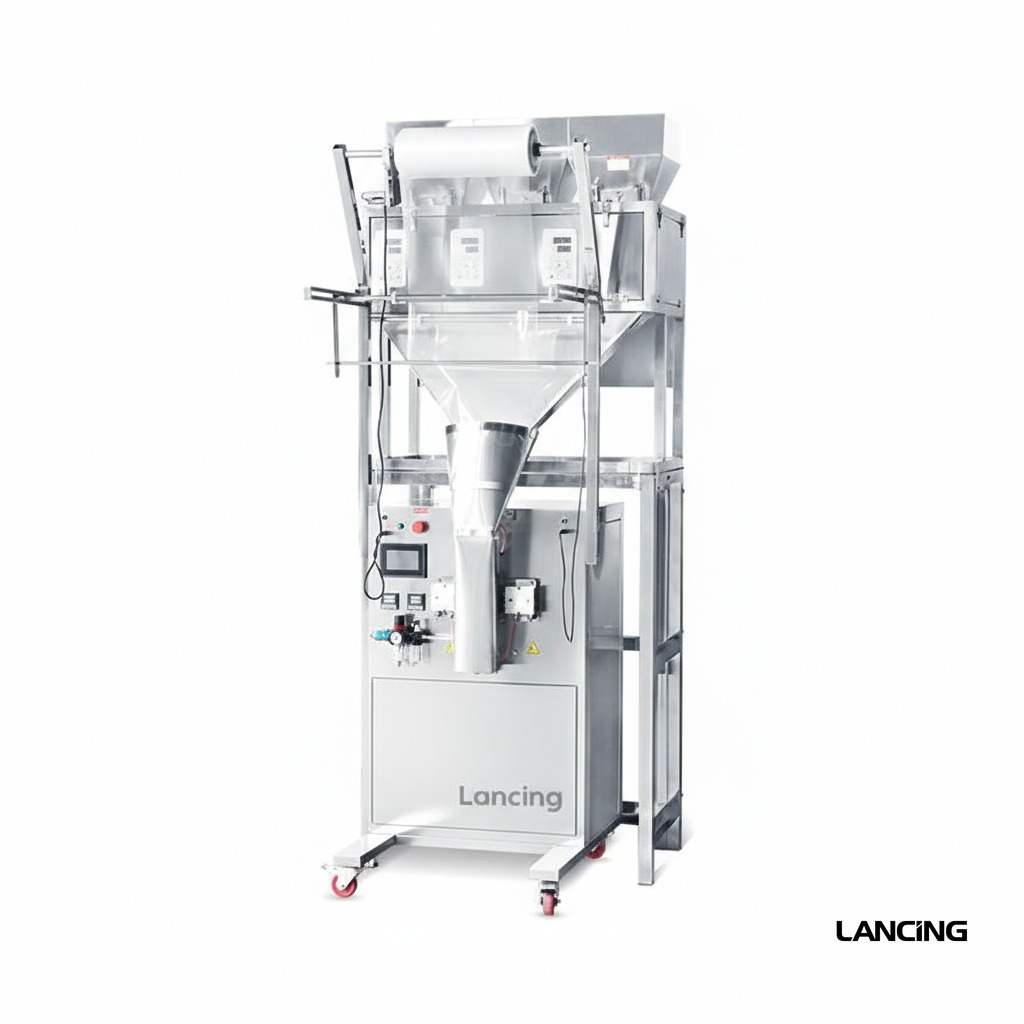
Liquid & Paste Filling Sealing Machine
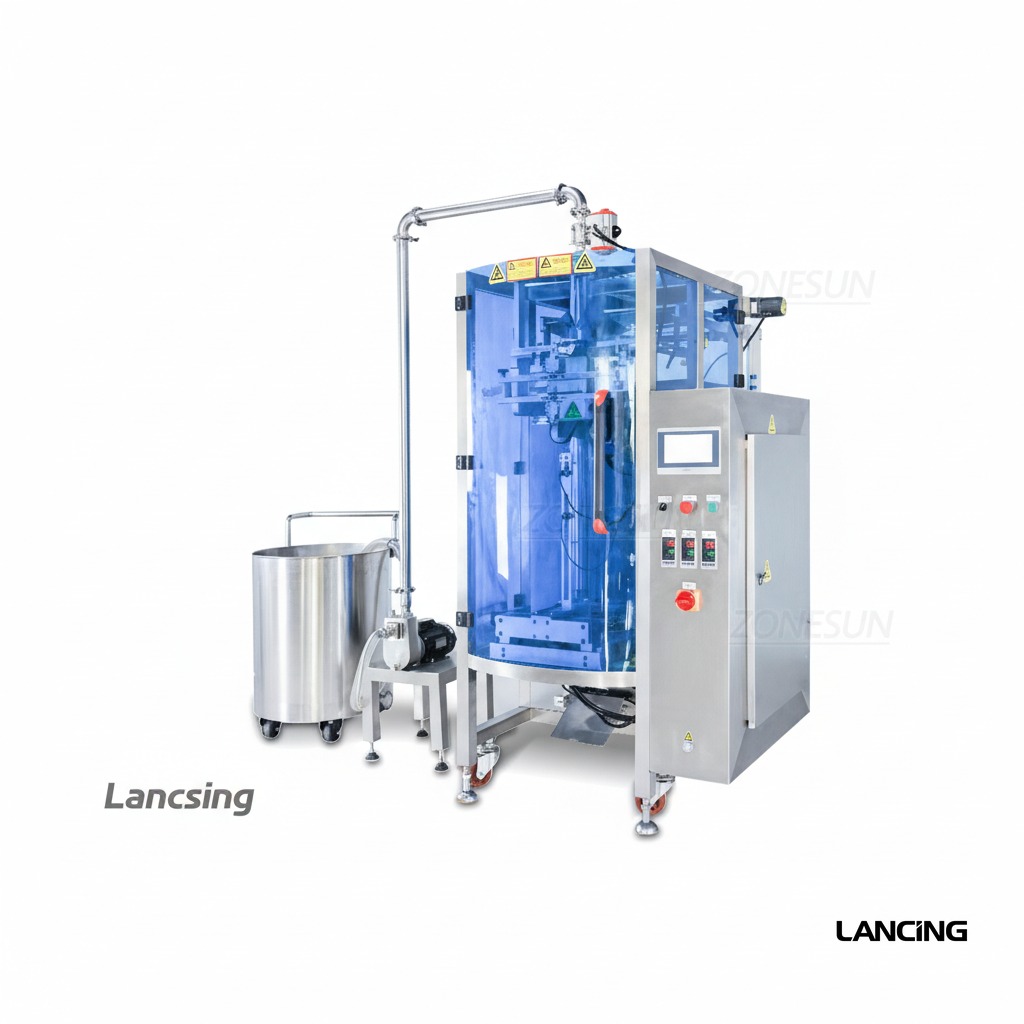
Automatic pouch filling and sealing route for liquid and paste products with configurable tanks, pumps and film widths.

Liquid pouch filling needs the correct pump route, clean cut-off, seal control and pack handling to prevent contamination and leakage.
These details decide whether the selected pouch filling route will be reliable in production.


Example machinery routes using Lancing UK source media and published machine information.
Automatic pouch filling and sealing route for liquid and paste products with configurable tanks, pumps and film widths.
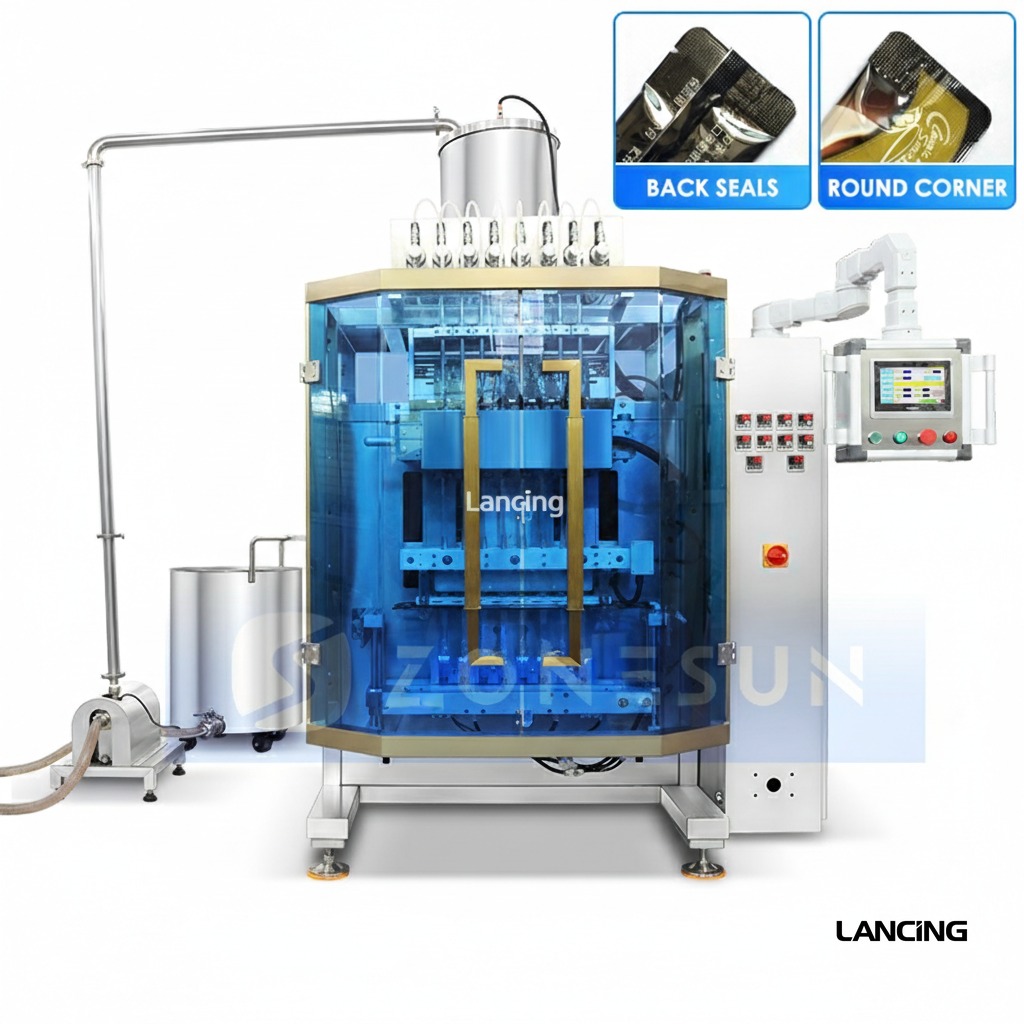
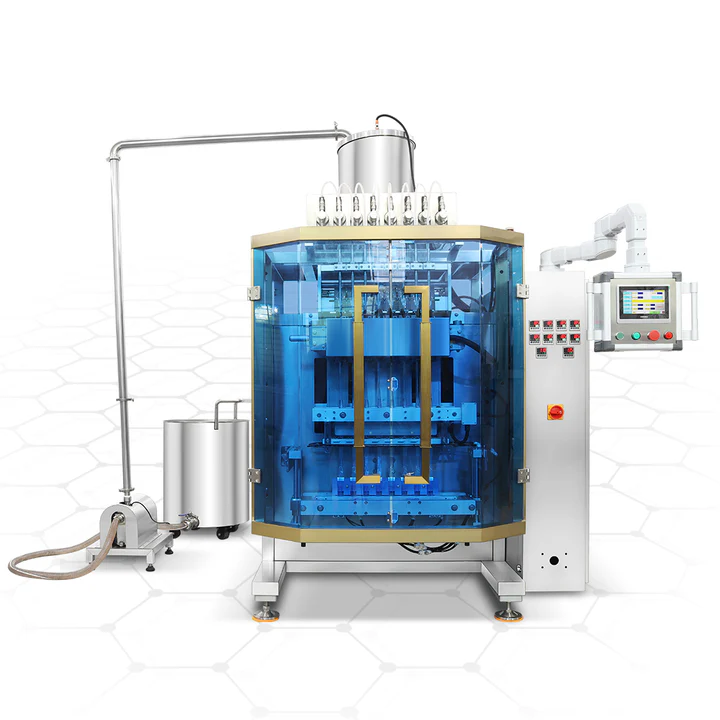
Eight-channel VFFS liquid bagging system for small-format liquid pouches where repeatability and output are key.
Better information normally gives a faster and more accurate machinery shortlist.
| Requirement | Why it matters | Example detail |
|---|---|---|
| Product behaviour | Controls the dosing method and clean cut-off route. | Powder, granule, thin liquid, viscous paste, particulates. |
| Pouch or film | Changes opening, sealing, registration and bag-forming requirements. | Dimensions, material, gusset, zipper, spout, seal width. |
| Output target | Determines automation level and line layout. | Bags per minute, shifts per day, manual steps to replace. |
| Line integration | Prevents bottlenecks after filling and sealing. | Coder, checkweigher, outfeed conveyor, secondary packaging. |
Yes, but viscosity, particulates, temperature and cut-off requirements must be confirmed before selecting the pump and sealing route.
A multi-channel system fills several small-format liquid pouches in parallel to improve output in sachet-style applications.
Correct seal dwell, clean cut-off, stable film control and pouch handling all reduce the risk of leakage.
We’ll help shortlist whether a premade pouch machine, VFFS bagger, auger, multihead weigher, piston pump or multi-channel liquid system is the practical route.
Liquid and paste pouch filling depends on more than nominal viscosity. Temperature, shear response, aeration, foaming, particles, stringing, product supply and clean-down all influence the pump, nozzle and cycle.
Confirm whether product arrives from a vessel, hopper, IBC or process line and whether it needs mixing, heating, recirculation or level control. The filler cannot remain repeatable if the product supply changes through the batch.
Magnetic, piston or other pump principles should be checked against viscosity, particles, chemical compatibility, dose range and cleaning. The smallest and largest dose should both be trialled where the project needs a wide range.
Nozzle diameter, dive profile, shut-off and fill height influence splashing, foam, tails and contamination. The available pouch opening, zipper, spout and seal zone set physical limits on the fill path.
Product on the seal face can prevent a reliable bond. Jaw settings, laminate, dwell, pressure, support and cooling should be assessed after filling, not on empty film alone.
Use these values as a starting point for trials. Actual performance depends on product, pump, dose, pouch or film, seal cycle and the wider line.
| Model | Reference system | Published format evidence | Published output |
|---|---|---|---|
| LU-420GSY | Automatic liquid and paste filling and sealing | 100–1000 ml; reference bag size 60–200 mm wide by 50–400 mm long; configurable pump and tank scope. | Approx. 30–45 bags/min |
| LU-FSMP8 | Eight-lane magnetic-pump liquid sachet VFFS | Per-lane reference sachet 15–26 mm wide by 34–150 mm long; maximum film width approx. 500 mm; back seal. | Approx. 25–40 sachets/min per lane |
The LU-FSMP8 is a specialist multi-lane sachet route. Detailed sachet ownership remains with Lancing Sachet Filling Machines.
Provide the product data needed to review wetted materials, seals, hoses, pump parts and cleaning agents. Food, cosmetic, chemical and industrial products may have different hygiene, compatibility and containment requirements, so assumptions should not be carried from one application to another.
For liquid filling into bottles and rigid containers, use Liquid Fillers. For specialist viscous products in rigid packs, use Paste Fillers. This page remains focused on liquids and pastes in flexible pouches and formed bags.
Provide temperature, density, particles, fibres, foaming, aeration, stringing, chemical compatibility, shear sensitivity, cleaning method and how the product will be supplied to the machine.
Possibly, but the smallest and largest dose, cycle time, accuracy target and nozzle behaviour must be checked. A wide range may require different pump sizes, cylinders, nozzles or recipes.
The line may use a suitable nozzle, controlled dive, positive shut-off, fill timing, pouch support, settling and correct headspace. The result needs to be proven with the actual product and pack.
Some systems can handle compatible particles, but size, shape, concentration and damage risk affect the pump, valves, nozzle and dose repeatability. Send a representative sample for review.
Confirm the reassembly, seals, pump prime, product path, recipe, nozzle alignment, first-off fill checks, seal cleanliness and any documented release check before normal production restarts.
Lancing can review the product feed, pump, nozzle, dose, seal area and finished-pouch acceptance using a representative sample.
Liquid and paste behaviour can change between priming, continuous operation and a pause. The trial should therefore record the full product path and the finished pouch at each operating state, not only a short sequence after the filler has been tuned.
| Operating state | Checks to define | Evidence to retain |
|---|---|---|
| Product supply and prime | Supply vessel, level, mixing or temperature condition, hose path, pump prime, air removal and return or recirculation where applicable. | Stable product at the nozzle before first-off dose and seal checks begin. |
| Steady measured run | Grouped fill checks, pump behaviour, nozzle cut-off, foam, particles, pouch support and seal cleanliness. | Repeatable accepted pouches under the agreed normal product condition. |
| Short pause | Drip, stringing, settling, pressure change, temperature change and product remaining at the nozzle. | A defined maximum routine pause or a required purge/recovery step. |
| Restart | Prime or circulation check, first dose, nozzle alignment, seal area and the number of pouches inspected before release. | A repeatable restart procedure with clear first-off approval. |
| Batch end and drain-down | Residual product, recoverable product, low-level response, air ingress and the point at which normal dosing stops. | An agreed end-of-batch method that does not hide underfills or contaminate seals. |
| Cleaning and reassembly | Product-contact parts, cleaning agent, access, drain points, seals, hose connections, re-prime and release checks. | A documented return to production without an unverified product path. |
Record the temperature, mixing, aeration, particle distribution and supply pressure or head condition used during the trial. If those conditions vary in production, define the expected range and test the relevant boundary. The filler cannot compensate for an undefined change in the product arriving at the pump.
The smallest and largest proposed dose should be reviewed with the corresponding pouch opening and nozzle, because a setup that works at one end of the range may not provide the same cut-off or cycle at the other.
Pair each fill sample with checks for drips, tails, product in the seal, trapped air, code position and the agreed integrity method. For rigid bottles and containers, use Lancing Liquid Fillers or Lancing Paste Fillers; this page remains focused on flexible pouches and formed bags.
Use the pouch sealing guide to define the finished-pack evidence.
Liquid and paste pouch filling should be assessed as a complete product path from supply vessel to filled pouch. Temperature, viscosity, particles, foam, head pressure and pause duration can change the way the product reaches and leaves the nozzle.
Define whether the product settles, separates, cools, thickens or contains suspended pieces. The tank, agitation, recirculation, heating or gentle transfer arrangement should support product quality without creating extra foam or shear.
The pump or piston route must suit viscosity and particles across the real operating range. Evaluate stringing, tailing, dripping, suck-back, nozzle wetting and the distance from nozzle to pouch so product does not reach the seal band.
Include a realistic pause, restart and end-of-batch condition. Record how the line is primed, how trapped air is removed, what product is purged, which parts are removed and how the first acceptable pouch is approved after cleaning or a stoppage.
| Product factor | Evidence | Review point |
|---|---|---|
| Viscosity and temperature | Range at filling, not only a room-temperature description. | Pump loading, pressure, dose repeatability and cut-off. |
| Particles or fibres | Largest size, concentration and tendency to settle. | Valve/nozzle clearance, damage risk and cleaning. |
| Foam or entrained air | Effect of pumping, agitation and drop into the pouch. | Fill level, cycle timing and headspace. |
| Product compatibility | SDS or supplier information where relevant and intended cleaning agents. | Product-contact materials, seals, hoses and safe procedure. |
Use the dosing-system selection guide for pump and piston decisions, then define clean pack acceptance with the seal-integrity guide. Fault symptoms can be structured with the liquid pouch troubleshooting route.
Liquid and paste trials should control the condition supplied to the filler and prove how the line behaves through pauses, replenishment and cleaning.
Temperature can change viscosity, flow, foaming and cut-off behaviour, so the same formulation may fill differently when cold, warm or after recirculation. Recording temperature makes dose and nozzle observations traceable and helps prevent a stable trial at one condition from being applied to another.
Use the expected production range rather than an arbitrary laboratory condition.
Foaming can require a gentler fill path or additional headspace, while stringing or dripping requires controlled cut-off and nozzle movement. The suitable arrangement depends on product rheology, temperature, dose, pouch opening and the need to keep the seal area clean.
Trial the real product and inspect the pouch mouth immediately before sealing.
Check whether product composition remains representative at the filler inlet throughout the batch. Tank geometry, agitation or recirculation, feed position, particle size and nozzle clearance can affect distribution and blockage risk.
Compare retained samples from early, middle and late in the run rather than relying only on total fill weight.
Use a defined restart state that reconditions the product path, confirms dose and cut-off, and identifies the first pouches for inspection or rejection. The sequence should also verify the seal area and restore code and inspection tracking before good output resumes.
Include planned pauses in the trial because recovery losses contribute to real output. See saleable output factors.
Send the application details, representative samples and required acceptance checks so Lancing can review the suitable pouch filling route.
The nominal pouch capacity does not define a safe operating fill level. Product temperature, viscosity, foam, suspended pieces, nozzle withdrawal, drip or stringing and the movement of the open pouch can all change the distance needed between the dose and the seal band.
| Product condition | Risk near the pouch mouth | Trial evidence |
|---|---|---|
| Foaming or aerated liquid | Foam rises after the dose and reaches the sealing area. | Foam height and collapse time at normal product temperature. |
| Viscous or stringing product | Product trails from the nozzle or contacts the mouth during withdrawal. | Cut-off, nozzle movement and clean-mouth observation. |
| Particulate liquid or sauce | Pieces interfere with nozzle passage or remain in the seal band. | Largest representative pieces, suspension and finished seal check. |
| Hot or temperature-sensitive product | Viscosity, foam, pouch stiffness and sealing response may change. | Tests at the intended operating temperature and after a pause. |
| High fill relative to pouch size | Splash, distortion or insufficient room for handling and closure. | Filled shape, headspace, zipper or spout clearance and restart result. |
Use the headspace, fill-level and seal-zone guide alongside the seal integrity guide.
No. Nominal capacity is not a complete machine setting. The process needs room for nozzle entry or product fall, foam or product movement, pouch handling, the zipper or spout and a clean seal band. Confirm the usable dose by filling the production pouch with the actual product.
Yes, when the pouch cannot be sealed cleanly until foam drops below the seal area. The line may need a dwell, revised nozzle method, lower shear or a different fill sequence. Count that process time when estimating saleable output.
A pause can change product temperature, viscosity, separation, pressure and the condition of material retained in the nozzle or hose. The first pouches after restart should be checked for dose, cut-off, splash, fill level and seal cleanliness.
Keep the dose path centred, control cut-off and withdrawal, provide sufficient headspace and prevent the open pouch from moving through the product stream. The zipper location and usable mouth depth should be part of the pouch trial.