Pouch filling machinery, VFFS bagging and filling & sealing lines from Lancing UK01494 623015 · sales@lancinguk.com
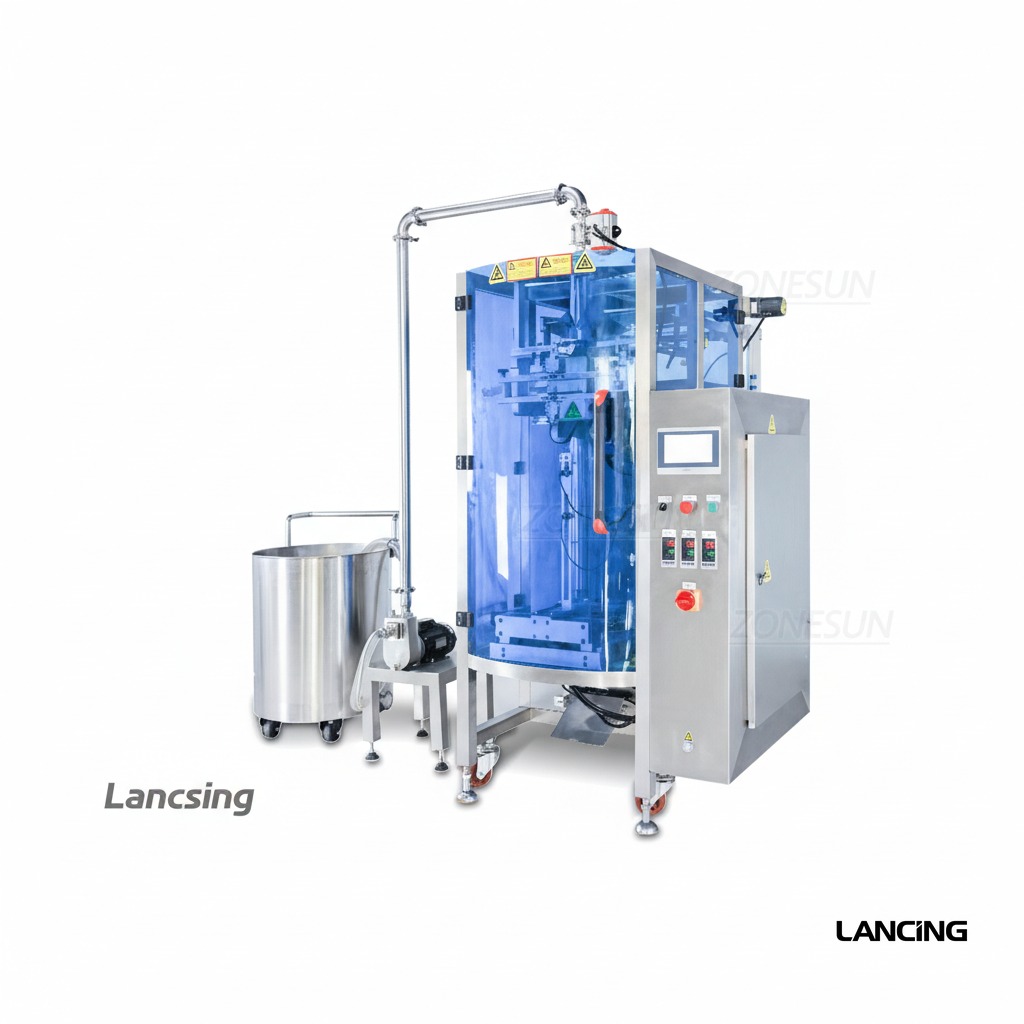
Liquid and paste pouch filling machine used to illustrate fill level and seal clearance
Pouch fill zone and clean sealing

How much headspace does a pouch filling process need?

A pouch needs enough unused space for the product to settle, the machine to handle the open pack and the seal or closure area to remain clean under normal production variation.

Define a usable fill zone rather than relying on nominal capacity.

The usable fill zone sits below the zipper, spout, handling area and final seal band. Its height changes with the product's occupied volume, aeration, foam, movement and settlement, as well as the filled shape expected from the pouch.

Product or pack factorEffect on the usable fill zoneEvidence to collect
Low-density or aerated powderOccupies more volume immediately after dosing and may settle slowly.Fill height after dosing and at the intended seal time.
Granules or piecesCan bounce, bridge or remain near the mouth.Product trajectory, settlement and clear seal-band result.
Foaming liquidFoam rises above the liquid level and may reach the seal.Foam height and collapse time at operating temperature.
Viscous or stringing productCut-off or nozzle withdrawal can contaminate the mouth.Clean nozzle release and product-free pouch opening.
Zipper, spout or gussetReduces available mouth depth or changes the final pouch shape.Feature clearance, filled profile and usable closure area.
Pouch handling and jaw entryGrippers, guides or jaws may need space above the product.Stable transfer and sealing without squeezing product upward.

Direct answers about pouch headspace and fill level.

How much headspace does a pouch filling process need?

The required headspace is the space needed to keep product below the handling, zipper, spout or seal area throughout dosing, settlement, transfer and sealing. It cannot be assigned safely as one percentage for every product. Establish it with the actual product, dose, pouch and machine sequence.

Include normal variation in product condition and packaging dimensions.

Can nominal pouch volume define the maximum dose?

No. Nominal volume does not reserve space for product movement, foam, dust, closure features, sealing or machine handling. It also does not describe how the product occupies the pouch. A practical maximum dose must be demonstrated by the finished-pack and seal acceptance criteria.

Use weight and occupied volume together where the product density varies.

Why does product settlement affect the seal cycle?

The jaws should close only after the product is below the seal band and the pouch is correctly presented. If powder, granules, foam or pieces remain near the mouth, the cycle may need a settling step, a different dose trajectory, containment or a larger pack.

Include that time when estimating saleable output.

When should the fill zone be revalidated?

Revalidate when dose, product condition, pouch dimensions, supplier, laminate, zipper, spout, nozzle, chute, settling method or seal position changes. Retest the checks affected by the change and retain a new approved filled pouch where the result is materially different.

A changed commercial appearance can also alter the physical handling window.

Run a fill-zone trial that exposes normal variation.

  1. Measure the empty pouch

    Record usable mouth depth, seal band, zipper or spout position, gusset and the intended gripping area.

  2. Condition the product normally

    Use the intended temperature, mixing, aeration, bulk density and representative pieces or particles.

  3. Observe the dose and settlement

    Record the highest occupied level, movement through transfer and the level at jaw closure.

  4. Check the final closure area

    Confirm the mouth, zipper, spout or seal band remains clean and correctly presented.

  5. Challenge the process

    Include replenishment, a pause and restart, and normal packaging or product variation.

  6. Retain the approved filled pouch

    Keep the sample, settings, dose result, seal evidence and any operating limitations.

Fill-zone evidence to send

  • Empty pouch drawing and samples
  • Target dose and permitted range
  • Product bulk density or occupied volume
  • Operating temperature and foam behaviour
  • Largest pieces or particles
  • Zipper, spout, gusset and seal band
  • Required filled presentation
  • Current seal or leak-test method

Related pouch filling guidance.

Seal integrity

Define the finished seal evidence and leak or integrity check before the trial.

Open the seal guide →

Send the dose, product and filled-pouch target.

Lancing can review whether the proposed pouch leaves a practical handling and sealing window for the intended product.

Send fill-zone details
Call nowContact us