Pouch filling machinery, VFFS bagging and filling & sealing lines from Lancing UK01494 623015 · sales@lancinguk.com
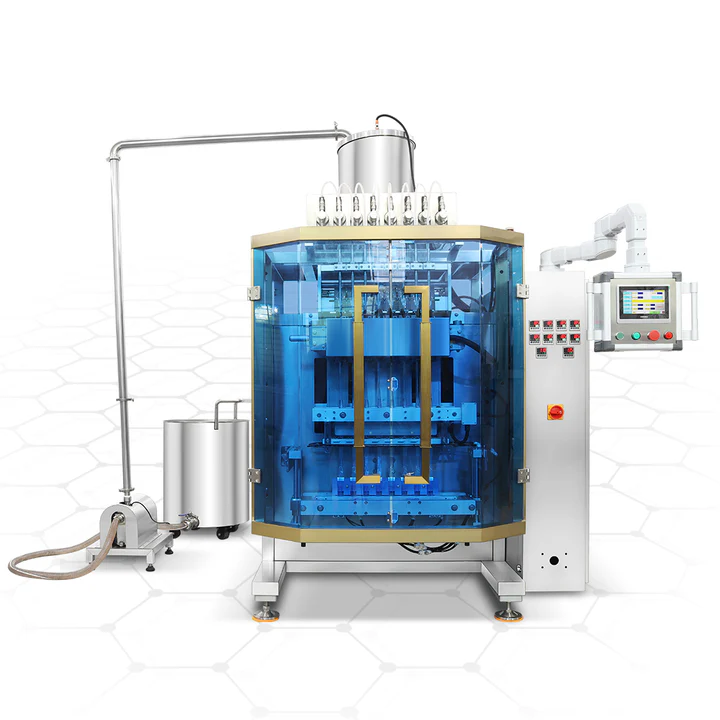
Blue guarded VFFS pouch filling machine
Pouch filling questions

What makes a pouch suitable for automatic filling.

A machine-ready pouch presents a repeatable datum, opens reliably, stays controlled during filling and provides a clean, compatible seal area across normal production variation.

Assess the pouch as a moving machine component.

The pouch must be stored, separated, located, opened, gripped, filled, sealed and discharged. A feature that is harmless in manual packing can become a repeatability problem when every station depends on the same datum and handling window.

Pouch evidenceWhy it matters to automationTypical trial observation
Width, height and tolerancesSets magazine, gripper, guide and jaw positions.Skew, clearance and repeatable presentation.
Usable mouth and opening forceDetermines whether the filler can enter without damaging the pack.Positive opening before dose permission.
Stiffness, friction and curlAffects separation, pickup and transfer.Single-pouch pickup across a production stack.
Zipper, spout or gussetChanges the datum, bulk and available seal or fill area.Feature clearance and undamaged final presentation.
Laminate and sealantInfluences handling, jaw process and finished-seal acceptance.Clean, aligned seals using the intended quality method.

Direct answers about machine-ready pouches.

Use representative production samples and supplier information to confirm the real handling window.

What makes a pouch suitable for automatic filling?

A suitable pouch can be separated one at a time, located from a stable datum, opened positively, held during dosing and sealed without product or features entering the seal band. Those functions must remain repeatable across normal supplier and batch variation.

Suitability is proved by the complete cycle, not by appearance alone.

Can nominal pouch dimensions prove machine compatibility?

No. Dimensions define geometry but not stiffness, friction, opening behaviour, feature bulk, sealant or manufacturing tolerance. Two nominally identical pouches can need different pickup, opening or seal settings.

Provide measured samples, the supplier specification and the intended filled shape.

Why do zipper, spout and gusset features need separate trials?

Each feature changes where the pouch can be gripped, opened, filled or sealed. A zipper reduces usable mouth depth, a spout changes balance and nozzle access, and a gusset can alter the flat datum and filled stability.

Trial every materially different feature set rather than treating it as a cosmetic variant.

When should a changed pouch be revalidated?

Revalidate when supplier, laminate, sealant, thickness, zipper, spout, dimensions, print coating or manufacturing process changes in a way that can affect handling or sealing. Use change control to identify which tests need repeating.

Retain the previous approved sample so the physical difference can be compared.

Build the sample set around variation, not only quantity.

Include pouches from normal production, the top and bottom of permitted dimensions where available, different manufacturing batches and any printed, coated or closure variants. Keep the samples in the storage condition expected before loading.

For the detailed evidence fields, use the pouch material and laminate guide and the opening and gripper guide.

Pouch evidence to send

  • Supplier reference and specification
  • Dimension and tolerance drawing
  • Usable mouth and seal area
  • Laminate and sealant identification
  • Zipper, spout, gusset and notch positions
  • Representative production batch
  • Filled reference pouch
  • Current seal and leak-test method

Send the actual pouch before the machine route is fixed.

Lancing can review how the pack must be presented, opened, held and sealed using the production evidence.

Send pouch details
Call nowContact us