
Pouch filling machinery, VFFS bagging and filling & sealing lines from Lancing UK01494 623015 · sales@lancinguk.com
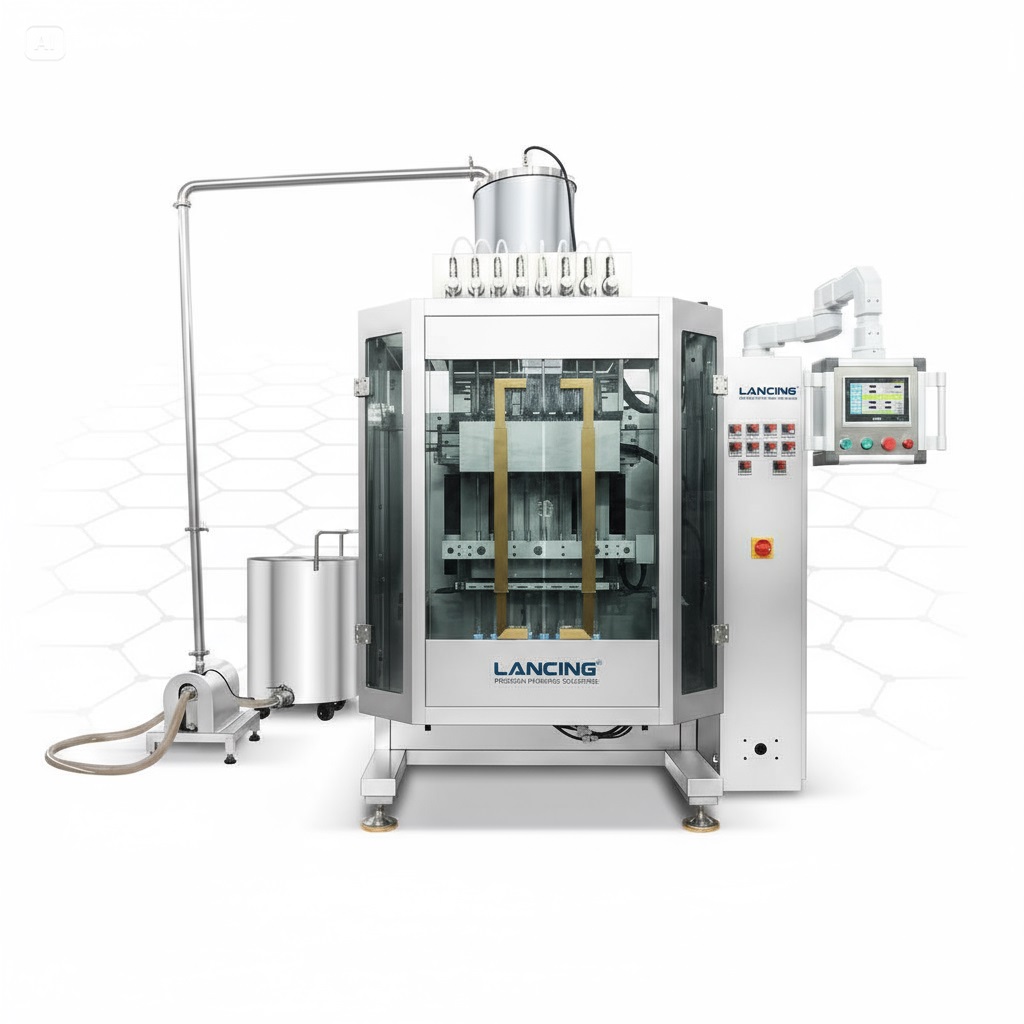
Lancing pouch filling machine portfolio used to explain rotary and linear layout decisions
Premade pouch layout comparison

Rotary or linear premade pouch filling machine: which layout fits the project?

Both layouts can automate premade pouch filling and sealing. The right route depends on station sequence, product feed, access, footprint, changeover and the tests used to define a saleable pouch.

Compare the production architecture before comparing machine names.

Rotary and linear premade pouch machines can both pick, open, fill and seal supplied pouches. The layout decision should follow the required process stations, floor plan, operator access, cleaning boundary, filler arrangement and evidence needed for a saleable pouch.

Decision areaRotary premade pouch routeLinear premade pouch route
Pouch movementPouches index around a circular sequence of stations.Pouches move through a straight or extended sequence of stations.
Footprint and accessCan concentrate several operations around one central machine; access must be checked around the full perimeter.Can suit a straight production flow; the total line length and side access must be checked.
Process stationsThe available stations must accommodate opening, dosing, settling, sealing, coding and inspection.Additional operations may be arranged along the line where the architecture provides suitable positions.
Dosing integrationProduct is commonly presented to one or more fixed stations around the index.Fillers can be positioned at the relevant stage of the straight-line sequence.
ChangeoverValidate magazine, grippers, opening, fill position, seal and recipes for each format.Validate guides, carriers, opening, fill position, seal and recipes for each format.
Selection evidenceUse a dimensioned pouch, representative batches, product samples, line layout, required quality checks and a controlled trial. Do not select from footprint or headline rate alone.

Direct answers about rotary and linear pouch machines.

Is a rotary premade pouch machine always faster?

No. Rotary geometry does not by itself determine saleable output. The practical rate depends on pouch separation and opening, product feed, dose time, settling, seal dwell, coding, inspection, reject handling, replenishment, stops and the number of usable stations. Compare both layouts with the same product, pouch and acceptance method.

When can a linear pouch machine be useful?

A linear pouch machine can be useful when the process needs a clear straight-line flow, several separated operations or straightforward access along the machine. Suitability still depends on available length, pouch support, dosing position, cleaning access and how upstream and downstream equipment will connect.

When can a rotary pouch machine be useful?

A rotary pouch machine can be useful when several operations need to be arranged in a compact indexed sequence. Confirm that the station count, access zones and product-feed position support every required operation, including opening confirmation, filling, settling, sealing, coding, inspection and rejected-pouch control.

Can the same pouch run on rotary and linear machines?

Possibly, but the same nominal pouch can behave differently in each handling system. Gripper datum, stiffness, friction, zipper or spout position, usable mouth opening, gusset shape and supplier tolerance affect pickup and control. Production-equivalent pouches should be trialled on the proposed layout.

Use a five-part layout decision.

  1. Define every process station

    List pouch pickup, opening, filling, settling, gas flush where required, cleaning of the seal area, sealing, coding, inspection, reject handling and discharge.

  2. Map product feed and utilities

    Show how the product reaches the filler, where hoppers or tanks sit, and how power, air, extraction, cleaning and access are provided.

  3. Check pouch control

    Test the magazine, separation, gripping datum, opening method, support during filling and seal presentation using normal pouch variation.

  4. Define saleable output

    Measure accepted pouches after coding, inspection and rejection rather than comparing unqualified cycle figures.

  5. Approve the line boundary

    Assign responsibility for infeed, product supply, conveyors, guarding interfaces, controls, downstream equipment, FAT and site acceptance.

Information to send for a layout comparison

  • Product, dose range and normal variation
  • Pouch drawing and production samples
  • Zipper, spout, gusset and seal-area details
  • Required process and inspection stations
  • Target saleable output and shift pattern
  • Available floor plan, access and utilities
  • Cleaning and changeover requirements
  • Upstream and downstream line interfaces

Related premade pouch guidance.

Compare layouts with the real pouch and product.

Lancing can review the station sequence, footprint, pouch handling and dosing route against representative materials.

Send the project details
Call nowContact us