Pouch filling machinery, VFFS bagging and filling & sealing lines from Lancing UK01494 623015 · sales@lancinguk.com
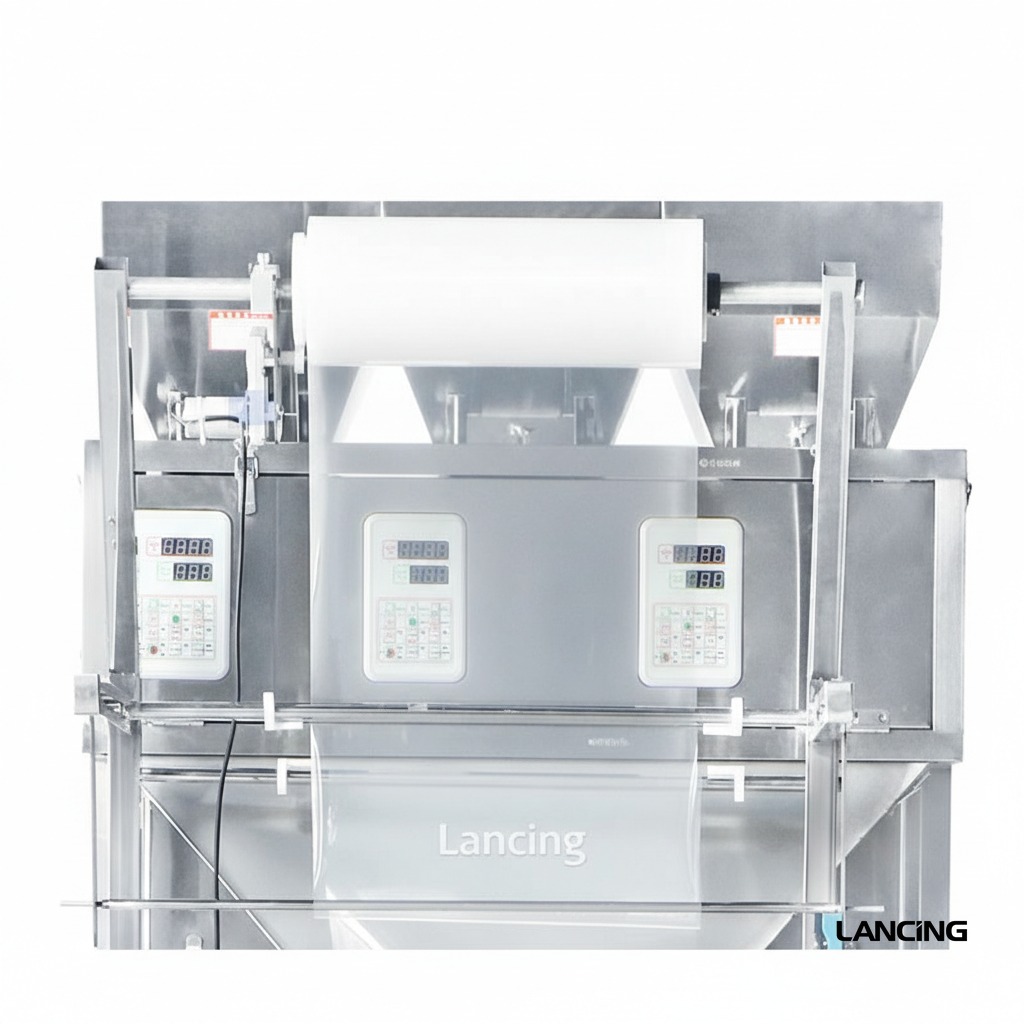
Detail of a Lancing VFFS pouch filling machine used for packaging-material trial guidance
Pouch material transition guide

Can recyclable or mono-material pouches run on a pouch filling machine?

Recyclable and mono-material pouches may run on premade pouch or VFFS machinery, but suitability must be proved with the final construction, normal material variation and an agreed seal test.

Separate packaging-design claims from machine compatibility.

A pouch may be described by its supplier as recyclable, mono-material or designed for a particular recycling stream, but those descriptions do not prove that it will feed, open, form or seal on a specific machine. Machinability must be established with the intended material, dimensions, features and production tolerance.

Material or pack factorWhy it matters to the machineEvidence to provide
Structure and thicknessInfluence stiffness, folding, tracking, gripping, jaw pressure and heat transfer.Supplier data sheet, thickness tolerance and production samples.
Sealant layer and process windowDetermine the combination of temperature, dwell, pressure and cooling needed for a stable seal.Recommended sealing range plus agreed seal-strength or integrity method.
Surface friction and stiffnessAffect magazine separation, vacuum pickup, gripper control, film unwind and forming.Representative batches, not only hand-selected samples.
Barrier, coatings, inks and adhesivesCan alter stiffness, heat response, registration and the usable seal zone.Final printed construction and artwork-position evidence.
Zipper, spout and gussetCreate local thickness and geometry that affect opening, gripping, filling and top sealing.Dimensioned drawing and finished reference pouch.
Supplier or construction changeA revised material can behave differently even when nominal size is unchanged.Controlled change notice and a re-trial plan proportionate to the change.

Direct answers about recyclable pouch machinability.

Can a mono-material pouch run on an existing pouch filling machine?

It may be possible, but compatibility should not be assumed from the material description alone. Compare the new pouch or film with the approved construction for thickness, stiffness, friction, opening behaviour, registration and sealing. A controlled trial should prove stable handling and an agreed finished-seal result.

Does the material change affect premade pouch and VFFS machines differently?

Yes. Premade pouch machines are especially sensitive to separation, pickup, opening and gripper control, while VFFS machines also depend on unwind, tracking, forming, longitudinal sealing and cross-sealing. Both routes need production-equivalent materials and a defined seal acceptance method.

Does a successful machine trial prove that a pouch is recyclable?

No. A machine trial proves machinability under the tested conditions, not the packaging's recycling classification or legal compliance. The packaging producer and supplier should retain the relevant design, test and compliance evidence. RecyClass and CEFLEX publish design-for-recycling guidance for flexible packaging.

When should a packaging material change be revalidated?

Revalidate when a change can affect feeding, opening, forming, filling, sealing, coding, inspection or pack performance. Examples include a new polymer family, thickness, sealant, barrier, coating, print system, zipper, spout, supplier or tolerance. The depth of the re-trial should match the technical risk.

Run a controlled material-transition trial.

  1. Freeze the reference pack

    Record the current construction, dimensions, tolerance, closure, artwork, machine recipe and approved quality evidence.

  2. Document the proposed material

    Obtain the final supplier specification, sealant information, thickness, print and closure details rather than testing an incomplete laboratory sample.

  3. Check machine handling

    Review separation, pickup, opening, gripping or film tracking, forming, registration and cut position across representative variation.

  4. Set and challenge the seal process

    Establish temperature, dwell, pressure and cooling using the site's approved seal-strength, leak or integrity method.

  5. Confirm coding and inspection

    Check code contrast and adhesion, registration, sensors, checkweighing or detection and reject handling on the final construction.

  6. Retain the approved evidence

    Store samples, results, settings, deviations and supplier references so the material can be controlled in production.

Material evidence to send

  • Supplier and construction reference
  • Polymer, barrier, coating and sealant details
  • Thickness and dimensional tolerance
  • Final print, inks and registration marks
  • Zipper, spout or gusset drawing
  • Recommended seal window
  • Production-equivalent samples or film reels
  • Required integrity and appearance checks

Packaging design references and related guides.

Use packaging-design guidance alongside machine trials. The RecyClass Design for Recycling Guidelines and CEFLEX flexible-packaging guidelines address collection, sorting and recycling design. They do not replace application-specific filling and sealing tests.

Pouch material and laminate

Record the construction, sealant, dimensions, zipper, spout and supplier tolerances.

Open the material guide →

Seal integrity

Define the process window and the method used to accept the finished seal.

Plan seal evidence →

Trial the final material, not only the sustainability claim.

Send the intended pouch or film construction, product, dose and acceptance checks so Lancing can review the practical machine test.

Discuss a material trial
Call nowContact us